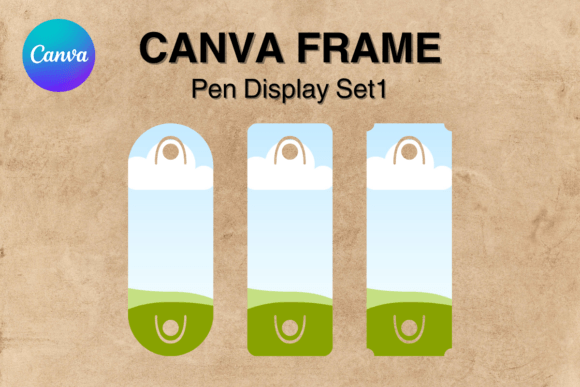
Pen Display Card Canva Frame Template_1
A Designer’s First Glance: Clean, Compact, and Purpose-Built
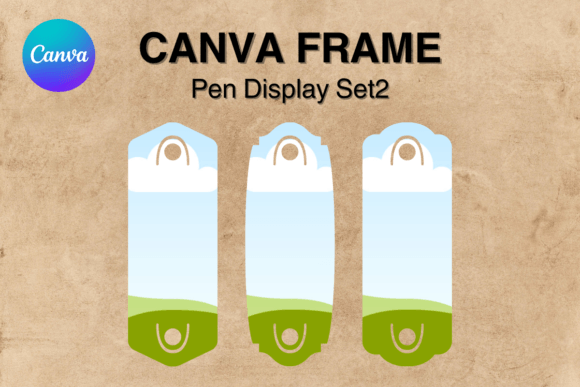
When I opened the Pen Display Card Canva Frame Template_1, my first thought wasn’t “pretty”—it was “practical.” Three minimalist 2.5" x 6" vertical frames, each designed to hold a handwritten or typed name, date, or short sentiment—like “Emma • 2024” or “Made with Love • Apron Co.” They’re not ornate, not overly decorative, and that’s exactly why they work so well for embroidery. As someone who regularly stitches on baby onesies, linen tea towels, and cotton tote bags for boutique clients, I appreciate when a design doesn’t compete with the fabric, the thread, or the handmade story behind it.
This Is What It Looks Like After Stitching—Not Just on Screen
I tested Pen Display Card Canva Frame Template_1 on a medium-weight cotton apron—same fabric I use for custom kitchen gifts—and paired it with a simple black satin stitch border and soft gray fill. The result? Crisp, legible, and quietly confident. Because the frame is narrow and vertically oriented, it avoids the bulkiness that can plague wider designs on curved surfaces like caps or sleeves. On a sweatshirt cuff or pillow cover edge, it reads as intentional—not an afterthought. And because it’s built for Canva, swapping in a client’s name or font takes seconds—no vector editing needed. That speed matters when you’re juggling five Etsy orders before lunch.
Where It Shines (and Where It Needs Extra Care)
The Pen Display Card Canva Frame Template_1 excels in small-scale, high-clarity applications: embroidered patches for craft fairs, personalized baby blankets, holiday gift tags stitched onto burlap sacks, or branded napkin sets for wedding rentals. Its clean lines translate beautifully into satin stitch borders and light fill stitch interiors—no dense underlay required. But here’s what I watched closely:
- Small hoop sizes: At 2.5" wide, it fits comfortably in a 4"x4" hoop—even a 3.9" hoop—with room to spare. No re-hooping mid-stitch.
- Textured or dark fabric: On linen tea towels or charcoal sweatshirts, I switched to cream or off-white thread instead of stark white. The contrast stayed clear without glare.
- Stretchy or thin fabric: Used tear-away + light cut-away stabilizer combo on a lightweight cotton cap visor—held perfectly. Without stabilizer, the fine frame lines would’ve blurred.
- Curved surfaces: Worked cleanly on a baseball cap’s front panel, but only because I used a cap hoop and adjusted tension slightly. Not ideal for complex curves like full-brim hats without testing first.
What It Adds to Your Finished Product—Beyond Decoration
A well-placed display card doesn’t just label—it elevates. When I added Pen Display Card Canva Frame Template_1 to a set of embroidered kitchen towels sold on Etsy, customers mentioned “feeling like it was made just for them.” That’s the power of personalization done right: subtle, legible, and consistent. It reinforces brand trust (especially if you use the same frame across product lines), strengthens giftability (“This feels like a real keepsake”), and supports commercial embroidery by keeping branding clean and scalable. For small shop owners, it’s also a smart digital asset—you can reuse the same Canva link across dozens of listings, tweak fonts per season, and never redraw a single line.
Real-World Notes from My Embroidery Desk
Before stitching Pen Display Card Canva Frame Template_1 into your next project, here’s what I do—and recommend you do too:
- Test it on scrap fabric *first*, especially if using textured weaves or blends.
- Check thread color contrast on both light and dark backgrounds—not just digitally, but in natural light.
- Review stitch density visually: look for any areas where fill stitches might crowd tiny corners or overlap text strokes.
- Confirm hoop size compatibility—this design fits standard 4"x4", but verify if your machine’s smallest hoop is tighter.
- Inspect small details at 200% zoom: are corners sharp? Does the frame scale evenly if resized?
- Try a black-and-white mockup: helps spot unintended visual weight or imbalance.
- Use proper stabilizer for your fabric type—don’t assume “lightweight” means “no stabilizer.”
- Double-check licensing terms before selling finished items or bundling this as part of a digital embroidery file pack.
A Thoughtful Fit for Real Makers
If you’re an embroidery designer building cohesive collections, a craft business owner curating signature packaging, or an Etsy seller tired of clunky, oversized labels on delicate baby embroidery—Pen Display Card Canva Frame Template_1 is a quiet upgrade. It doesn’t shout. It doesn’t overcomplicate. It simply holds space for meaning: a name, a date, a small note of care. In a world of busy patterns and crowded layouts, that kind of restraint is rare—and valuable. Whether you’re stitching on organic cotton onesies or prepping printable mockups for your next digital product launch, this template works because it respects the craft, the customer, and the cloth.
Final Takeaway: Less Is Legible
Good embroidery design isn’t about how much you can fit—it’s about how clearly your intention lands. Pen Display Card Canva Frame Template_1 gets that. It’s not flashy. It won’t win awards for complexity. But it will make your embroidered patch look intentional, your holiday gift feel personal, and your small shop product stand out—not through noise, but through thoughtful presence. That’s the kind of design that earns repeat buyers, word-of-mouth referrals, and the quiet satisfaction of knowing your work looks as good stitched as it does on screen.