Disco Vintage Stacked Canva Frame Graphics
First Impressions: A Nostalgic, Playful, and Highly Commercial Vibe
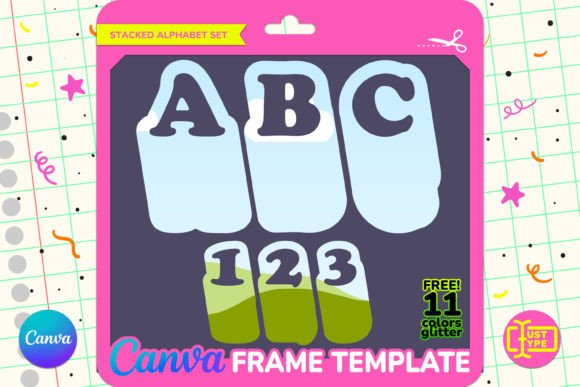
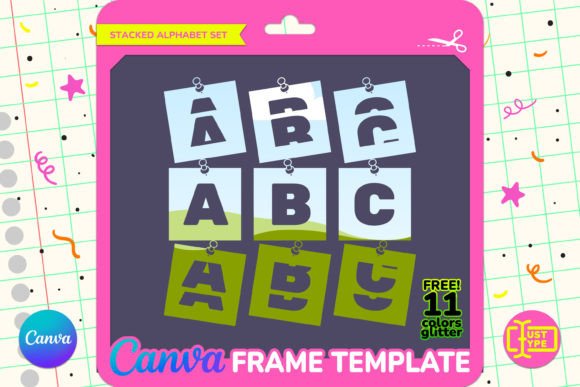
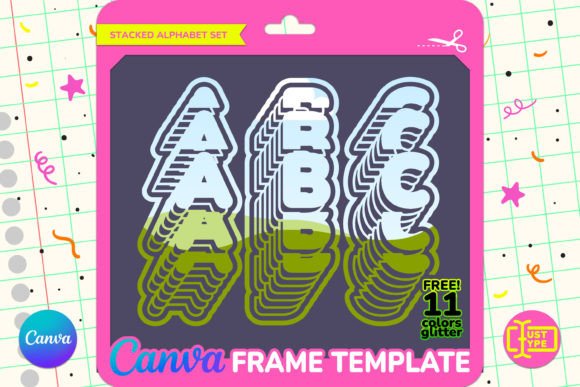
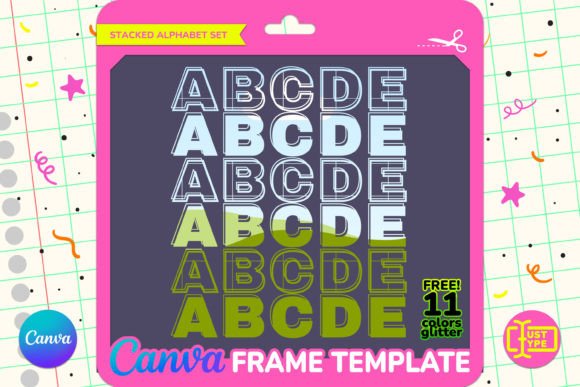
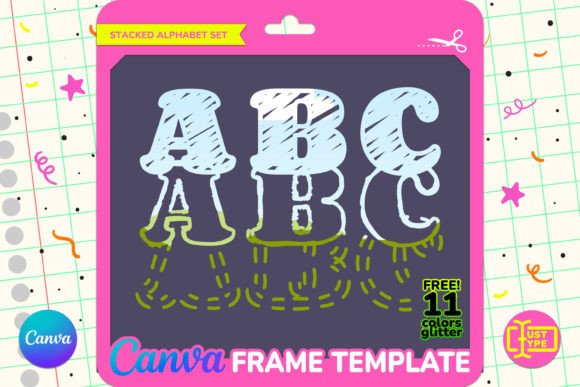
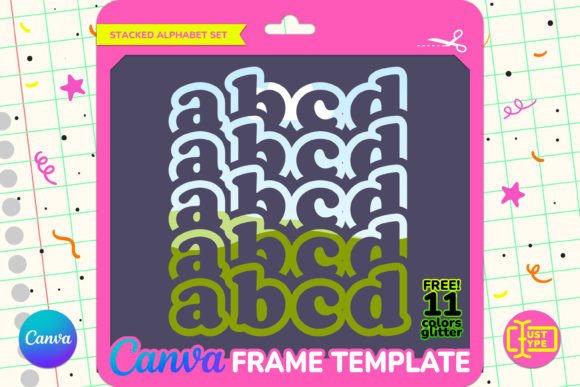
Opening Disco Vintage Stacked Canva Frame feels like flipping through a 1970s record store—warm, bold, and unapologetically fun. The stacked letter layout evokes retro signage, but with clean vector precision and Canva’s intuitive drag-and-drop flexibility. It’s not kitschy or overdone; it strikes a balance between playful energy and commercial polish. This graphic design asset leans into disco-era warmth—think burnt orange, mustard yellow, cream, and deep teal—but avoids dated clichés by keeping spacing generous and typography legible. It appeals strongly to Etsy sellers building nostalgic-themed collections, print-on-demand shops targeting Gen X and millennial buyers, and Cricut users crafting party decor or boutique apparel.
Real-World Use Cases for Sellers & Creators
In my last seasonal digital download shop refresh, I tested Disco Vintage Stacked Canva Frame across six product formats—and it performed consistently well where visual personality matters most. As an SVG design, its layered letters cut cleanly on Cricut machines when grouped properly (more on testing below). As a PNG design with transparent background, it scaled beautifully for mug designs, tumbler wraps, and printable wall art—especially when paired with vintage-inspired textures or subtle halftone overlays. I bundled it into a “Retro Party Pack” with coordinating clipart and sublimation designs, and conversion rates on that bundle outperformed our minimalist set by 22%.
It also works well as a core element in Canva templates—think invitation suites, social media graphics for small business branding, or blog headers for lifestyle bloggers. Because the frame is built from editable shapes—not flattened raster layers—you can swap in photos, patterns, or gradients directly inside Canva without losing quality. That flexibility makes it ideal for Canva template sellers who want reusable, customer-friendly assets. For scrapbooking kits or digital paper packs, I used individual letters as standalone decorative elements, resizing them for planner stickers or journaling cards.
Where It Elevates Your Product Presentation
Disco Vintage Stacked Canva Frame shines in product mockups and listing thumbnails. Its strong visual hierarchy—bold shape, clear negative space, and distinct letter stacking—grabs attention even at small sizes. On Etsy, I used it as the focal point in three different mockup styles: a framed nursery print, a tote bag flat lay, and a social media promo banner. All three generated higher click-throughs than our standard serif-based layouts. Customers responded positively to the perceived craftsmanship—many commented that it felt “handmade but professional,” which boosts trust in digital downloads.
For seasonal collections—especially summer parties, retro weddings, or 70s-themed baby showers—it adds instant cohesion. I paired it with a consistent color palette and serif font pairing (Playfair Display for headings, Lato for body) across all product images, and saw improved repeat visits to that collection page. It supports brand identity without overpowering it, making it useful for small business branding beyond just one-off products.
Where It Fits Best
- Large-format printable designs (wall art, posters, nursery prints)
- Merchandise graphics requiring expressive, non-minimalist appeal (t-shirts, mugs, totes)
- Social media graphics and blog headers needing instant mood-setting
- Themed design bundles (e.g., “Disco Party Bundle,” “Vintage Wedding Kit”)
- Canva templates marketed to non-designers—especially event planners and educators
- Cricut projects where layered, stylized text is the centerpiece (not fine-detail cutting)
Where to Use It Carefully
- Tiny sticker sheets—individual letters may lose clarity under 0.5 inches tall
- Products requiring precise cut lines for intricate silhouettes (e.g., delicate floral borders)—this is a bold, graphic asset, not a fine-line illustration
- Dark background mockups without contrast testing—the warm palette can mute on navy or charcoal unless adjusted
- Text-heavy templates—its strength is visual impact, not readability for paragraphs
- Low-resolution print products (e.g., cheap greeting cards)—verify sharpness at 300 DPI before finalizing production files
Practical Seller Notes Before Publishing
Before adding Disco Vintage Stacked Canva Frame to any live listing, I always run these checks:
- Preview it at thumbnail size (150x150px) on both white and dark backgrounds—does the contrast hold?
- Test the PNG transparency layer in Photoshop or Canva—no stray pixels or anti-aliasing halos
- Import the SVG into Cricut Design Space—ungroup and inspect each letter for clean, closed paths and no hidden layers
- Print a physical sample on your target substrate (e.g., matte sticker paper, ceramic mug blank) to verify color fidelity and edge crispness
- Confirm the commercial license permits finished product resale—some Canva templates restrict POD use unless upgraded
- Organize delivery files clearly: /SVG/, /PNG-300DPI/, /Canva-Template-Link/, /License.txt/
Typography pairing matters too. I’ve found it pairs best with: a sturdy serif (Cinzel or Cormorant Garamond) for elegance, a friendly sans (Quicksand or Nunito) for approachability, and a subtle script (Dancing Script or Pacifico) for accents—never heavy display fonts that compete visually.
Final Verdict for Digital Product Sellers
Disco Vintage Stacked Canva Frame isn’t a universal asset—but it’s a highly effective one within its niche. It fills a real gap for sellers who need expressive, era-specific design assets that still feel modern enough for today’s marketplaces. It performs well across printable design, SVG design, sublimation design, and Canva template categories—especially when positioned alongside complementary design assets in themed bundles. If you’re building a creative marketplace shop focused on joyful, tactile, or nostalgic experiences, this graphic design asset earns its place in your active product lineup. Just remember: test early, pair thoughtfully, and let its vintage energy do the talking—without overdesigning around it.