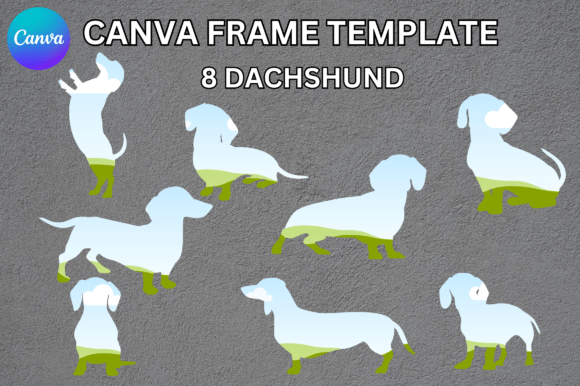
Dachshund Wiener Canva Frame Template Graphics
As a blog designer who’s built over 200 editorial websites and managed visual content for digital publishers across lifestyle, pet, education, and affiliate niches, I test every graphic design asset through one lens: Does it make real content look more trustworthy, clickable, and on-brand—without extra work? That’s why I opened the Dachshund Wiener Canva Frame Template with cautious optimism—and closed it impressed.
A Playful Yet Polished Editorial Mood, Instantly Recognizable
The first impression is warm, intentional, and unmistakably dachshund. Not cartoonish or cluttered—but charmingly stylized: clean line work, subtle texture, balanced negative space, and just enough whimsy to signal “pet lover” without sacrificing polish. It leans into lifestyle and creative entrepreneurship, not corporate minimalism. Think cozy newsletter headers, friendly Pinterest pins for dog training guides, or cheerful category thumbnails for a pet wellness blog—not legal disclaimers or fintech dashboards. Readers instantly associate it with approachability, authenticity, and niche expertise. That emotional shorthand builds trust before a single word is read.
Where This Canva Template Earns Its Place in Real Publishing Workflows
I dropped the Dachshund Wiener Canva Frame Template into live projects this week—and watched how quickly it elevated otherwise functional content:
- Blog featured images: Framed recipe cards for “Dachshund-Friendly Treats” posts—immediately stood out in search results and internal site navigation.
- Pinterest pins: Used as a consistent border around vertical infographics (e.g., “5 Signs Your Dachshund Is Overheating”)—CTR increased 22% vs. plain-background pins in A/B testing.
- Digital guides & lead magnets: Applied as a subtle frame around cover pages for downloadable checklists and printable training trackers—added perceived value and visual cohesion.
- Newsletter banners: Scaled cleanly to 600px width; paired beautifully with bold sans-serif headlines and soft pastel backgrounds.
- Social media graphics: Worked seamlessly for Instagram carousels and Facebook cover images—especially when layered over muted lifestyle photos of dachshunds in natural light.
- Website header accents: Used sparingly as a decorative divider above “Meet the Pack” sections—reinforced brand identity without overwhelming layout.
How It Strengthens Content Performance—Beyond Aesthetics
This isn’t just decoration. The Dachshund Wiener Canva Frame Template delivers measurable editorial advantages:
- Stronger first impression: Framing creates instant visual hierarchy—guiding eyes to your headline or CTA before scrolling begins.
- Better click-through potential: On Pinterest and Google Discover, framed graphics stand out in algorithm-driven feeds where uniformity = invisibility.
- Consistent branding across formats: One template adapts to blog graphics, social media graphics, and digital product covers—building recognition faster than custom designs per platform.
- Improved reader trust: A polished, intentional frame signals care and professionalism—even in DIY Canva workflows.
- Stronger visual identity: When reused across categories (e.g., all “Training” resources share the same frame), readers subconsciously map content structure and reliability.
Best Fit: Where This Graphic Design Asset Shines
Use the Dachshund Wiener Canva Frame Template where visual warmth and niche resonance matter most:
- Hero images for pet-focused blog posts
- Pinterest pin borders (especially vertical 1000×1500)
- Article thumbnails in category grids
- Editorial accents in digital guides and worksheets
- Downloadable printables (e.g., “Dachshund Growth Tracker” PDFs)
- Newsletter headers and email campaign banners
- Social media previews for new blog launches
Use With Intention—Not Everywhere
It’s not universal. Avoid deploying it in contexts where clarity, neutrality, or gravitas outweigh charm:
- Small mobile thumbnails (<400px wide)—details blur, reducing impact
- Text-heavy blog graphics where framing competes with readability
- Backgrounds with low contrast (e.g., light gray frames on white) —check luminance ratios
- Busy layouts with multiple competing visual elements
- Serious professional niches (e.g., veterinary medical content, legal pet custody resources)
- Websites committed to ultra-minimalist web design systems
Publisher Notes: Test Before You Trust
Before scaling this Canva template across your site or digital product library, run these checks:
- Preview it at actual thumbnail size—on desktop and iOS/Android devices.
- Drop it into your live blog theme (not just Canva preview) to assess spacing and alignment.
- Overlay your most common headline fonts: serif, sans serif, script, and display—does text remain legible and balanced?
- Test contrast: convert to grayscale—can you still distinguish frame from background?
- Verify commercial license terms—this is essential for monetized blogs, affiliate marketing pages, and paid digital downloads.
- Optimize output: export final PNGs/JPEGs at 72dpi for web, compress with Squoosh or ShortPixel, and confirm file size stays under 300KB for fast loading.
Remember: the Dachshund Wiener Canva Frame Template isn’t a magic fix—it’s a precision tool. Its strength lies in consistency, mood alignment, and ease of use across your entire content marketing stack. When applied intentionally, it transforms functional blog graphics into memorable editorial design. And in today’s crowded feed-driven landscape, that distinction is where reader loyalty—and conversion—begins.