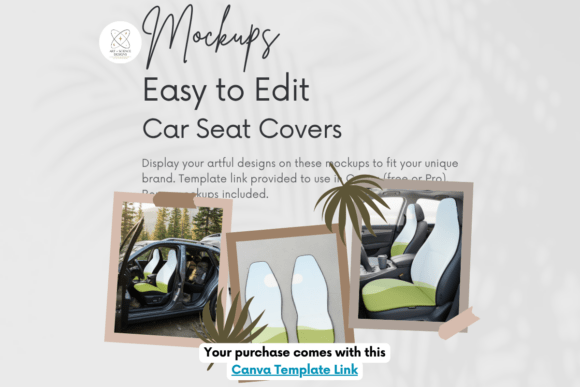
Car Seat Covers Canva Lifestyle Mockup
A Designer’s First Glance: Mood, Shape, and Real-World Fit
When I opened Car Seat Covers Canva Lifestyle Mockup, my first thought wasn’t “pretty”—it was “practical.” The composition feels grounded, not fussy: clean lines, balanced negative space, and a lifestyle-oriented framing that suggests comfort, care, and everyday use. It doesn’t scream “embroidery design” at first glance—it whispers “thoughtful product presentation.” That’s actually ideal for embroidery designers who need to show clients or customers how their stitched work lives in real life—not just on a blank hoop, but on something tactile, lived-in, and human.
Where This Mockup Earns Its Keep—Not Just as a Visual, But as a Design Compass
I recently used Car Seat Covers Canva Lifestyle Mockup while prepping a custom embroidered baby blanket for a boutique client. Not for the blanket itself—but to preview how a soft, minimalist floral motif would read when stitched onto cotton-blend fabric, layered under gentle lighting, and styled beside a wooden crib rail. The mockup didn’t just display the design; it revealed how stitch density affected texture contrast, how satin stitch edges softened against the fabric grain, and whether the overall scale felt intimate (right for nursery decor) or lost (wrong for tiny onesies). That kind of insight is rare—and invaluable—before cutting stabilizer or threading a needle.
How It Performs Across Common Embroidery Projects
- Custom apparel & sweatshirt embroidery: Works well for front-chest placements—its proportions naturally guide you toward balanced sizing, avoiding overscaling that distorts stitch clarity on ribbed knits.
- Tote bag design & aprons: The mockup’s relaxed, slightly angled perspective helps visualize drape and fabric movement—critical when planning where running stitch borders or fill-stitch motifs will land on curved seams or pockets.
- Baby embroidery & holiday embroidery: Its warm, uncluttered aesthetic supports delicate themes—think monogrammed bibs, embroidered tea towels for Christmas gifting, or personalized pillow covers for new parents. No visual competition; just quiet confidence in the craftsmanship.
- Embroidered patch & cap projects: Use with caution here. The mockup assumes flat, stable surfaces—so while it’s great for previewing patch layout or logo placement on a flat surface, it won’t simulate the curve of a cap crown or the tension shift on a baseball hat bill. Always pair it with physical test stitching on your target garment.
Where to Pause—and Why
Car Seat Covers Canva Lifestyle Mockup shines in context, but it doesn’t solve every embroidery challenge. If you’re working with thin fabric, stretchy knits, or dark backgrounds, don’t rely solely on how the mockup renders contrast or detail. What looks crisp in Canva may blur in dense fill stitch on jersey, or vanish entirely on black terry cloth without careful thread color selection. Likewise, tiny lettering or decorative accents—like fine stem stitches in a botanical border—won’t translate accurately unless you’ve verified them at actual stitch size on scrap fabric first.
Design Integrity Starts Before the Machine Turns On
Before committing to a client deadline or uploading to Etsy, I always run this checklist with any mockup—including Car Seat Covers Canva Lifestyle Mockup:
- Test the embroidery file on scrap fabric matching your final product’s weight and stretch.
- Check thread color contrast in both natural and artificial light—especially if selling handmade products online.
- Review stitch density: high-density areas can pucker lightweight fabrics or stiffen baby items uncomfortably.
- Confirm hoop size compatibility—some layouts assume a 5x7" hoop, but smaller hoops demand simplified versions.
- Inspect small details in black-and-white mockups—this reveals legibility issues invisible in color previews.
- Compare how the design reads on light vs. dark fabric backgrounds in Canva—then verify with physical swatches.
- Use appropriate stabilizer for your fabric type—no mockup replaces real-world stabilization decisions.
- Confirm licensing terms before using the mockup in commercial embroidery or digital product listings—especially if selling finished items or editable design assets.
What It Adds to Your Craft Business—Beyond Aesthetics
This isn’t just about making listings look polished. Car Seat Covers Canva Lifestyle Mockup subtly elevates perceived value. When an Etsy seller uses it to show an embroidered kitchen towel beside a ceramic mug and fresh herbs, buyers don’t just see thread—they see intention, care, and lifestyle alignment. That builds trust faster than five-star reviews. For small shop owners, it reinforces brand consistency across social posts, email banners, and print catalogs—without needing a photographer on retainer. And for craft fair vendors? It helps translate booth energy into digital storytelling long after the event ends.
Final Thought: A Tool That Respects Your Process
As someone who’s stitched everything from wedding handkerchiefs to boutique apron collections, I appreciate when a design asset like Car Seat Covers Canva Lifestyle Mockup doesn’t try to be everything—but does one thing exceptionally well: grounding embroidery in reality. It doesn’t replace stitch testing, fabric knowledge, or client conversation. Instead, it extends your judgment—giving you a clearer lens to assess scale, harmony, and emotional resonance *before* the first needle drops. That’s not convenience. That’s craft intelligence.